
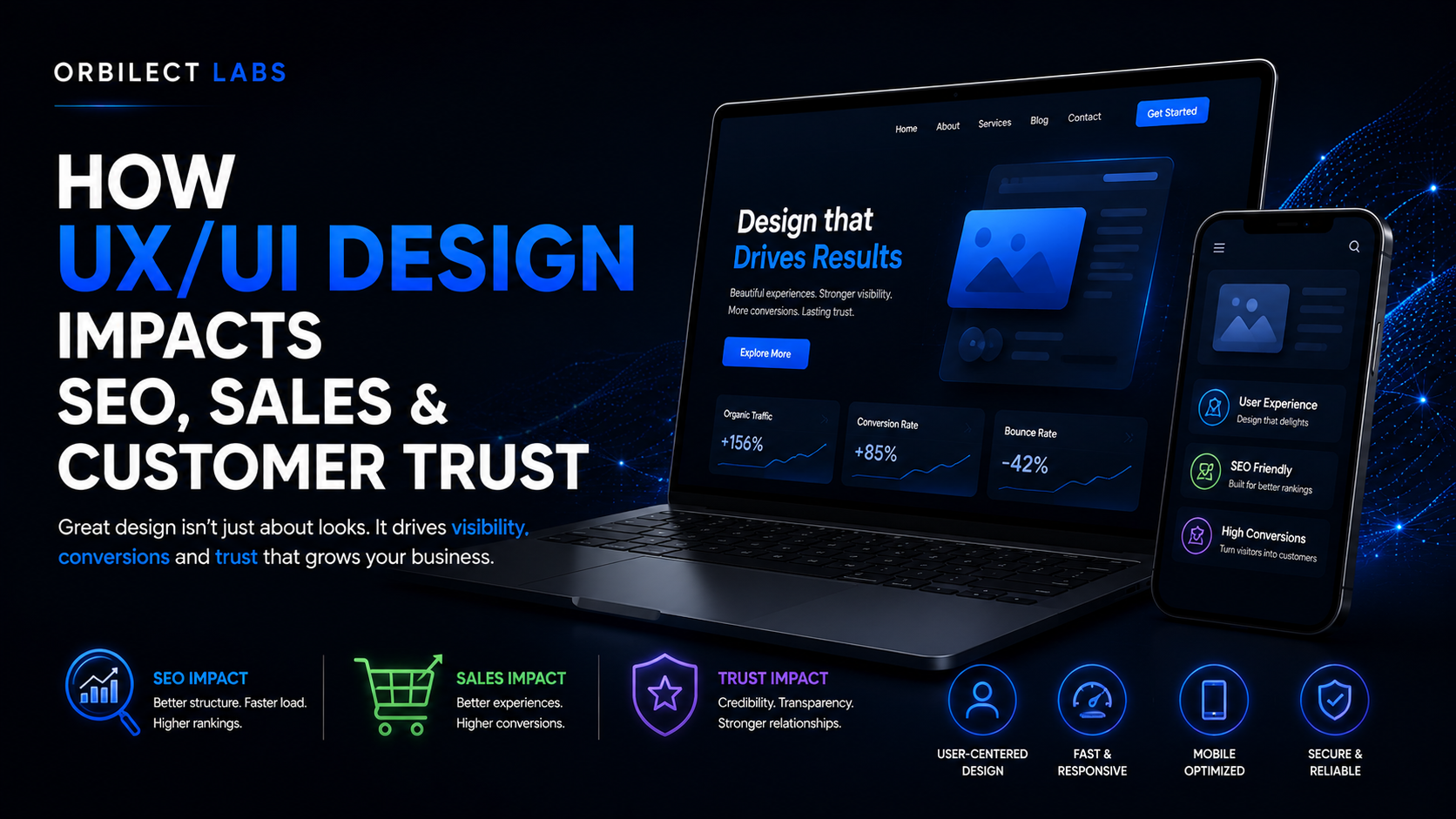
Design is no longer just a visual layer.
A website or application can have excellent technology, strong marketing and a compelling product, but users still judge the experience within seconds. If the interface feels confusing, slow or unreliable, visitors can leave before discovering what the business actually offers.
That is why UX/UI design has become a business function rather than simply a creative discipline. The structure of a page affects how search engines understand content, how users navigate a product and how confidently customers move toward a purchase or enquiry.
Better experiences create better business outcomes.
Strong UX reduces friction. Strong UI communicates value. Together they can improve visibility, engagement, conversion and trust.
How UX/UI design impacts SEO
Search engine optimization is often treated as a separate marketing activity, but modern search performance is deeply connected to the experience users receive after clicking a result.
Clear information architecture, responsive layouts, accessible content and fast-loading interfaces make it easier for both users and search engines to understand a digital experience.
Clear Structure
Logical navigation helps users and search engines discover important pages and content.
Better Engagement
Useful experiences encourage visitors to explore rather than immediately abandon the page.
Mobile Experience
Responsive design ensures the experience works consistently across different screen sizes.
Great UX can turn visitors into customers.
Every unnecessary step between a visitor and a conversion creates an opportunity for that visitor to leave. UX design focuses on removing those unnecessary obstacles.
A strong sales experience makes the next action obvious. Whether that action is booking a call, purchasing a product, submitting a form or starting a free trial, the interface should guide users naturally toward the outcome.
Users associate good design with credibility.
Before a customer reads every sentence on your website, they form an impression from the visual experience. Typography, spacing, consistency, interaction quality and visual hierarchy all contribute to that first impression.
Consistency
Consistent visual patterns make a product feel established and professionally maintained.
Transparency
Clear pricing, messaging and navigation reduce uncertainty during the customer journey.
Confidence
A polished interface gives users confidence that the business behind it is reliable.
UX begins with performance.
Beautiful interfaces cannot compensate for a product that feels slow. Performance should therefore be considered part of the UX process from the beginning rather than added as an optimization task at the end.
- 01Optimize images and media.
- 02Minimize unnecessary JavaScript.
- 03Use responsive layouts.
- 04Prioritize critical content.
- 05Test real-world mobile performance.
Mobile-first design is essential in 2026.
A digital experience that looks excellent on a desktop monitor can still fail when users interact with it on a smaller screen. Navigation, buttons, typography and forms all need to be designed around real mobile behavior.
Design for thumbs, not just screens.
Touch targets, spacing, hierarchy and navigation should all account for how people actually use smartphones.
UX/UI design and conversion optimization work together.
Conversion-focused design is about understanding what a user needs to make a decision and then presenting that information at the right moment.
Accessible design creates better experiences for everyone.
Accessibility should not be treated as a final compliance task. Clear contrast, readable typography, keyboard navigation, descriptive labels and thoughtful interaction patterns can improve usability for a much broader audience.
Design systems make digital products easier to scale.
As websites and applications become larger, inconsistent components create friction for both users and development teams. A design system establishes reusable visual and interaction patterns.
Components
Reusable UI building blocks.
Tokens
Consistent colors, spacing and typography.
Patterns
Repeatable interaction experiences.
Guidelines
Clear rules for product teams.
Common UX/UI mistakes businesses should avoid.
Too much information
Overloaded screens make important information harder to discover.
Weak visual hierarchy
Users should immediately understand what deserves attention first.
Unclear calls to action
Users should not have to guess what to do next.
Ignoring mobile
A desktop-first interface can create major usability problems on smaller screens.
What is the ROI of investing in UX/UI?
UX/UI investment can influence multiple parts of the customer journey simultaneously. Better usability can reduce abandonment, improve conversion and increase the likelihood that customers return.
UX/UI checklist for a modern digital product.
Frequently asked questions
Does UX/UI design affect SEO?+
Yes. Site structure, mobile usability, accessibility, performance and user experience can all influence the quality of a website experience and its search performance.
Can better UX increase sales?+
Better UX can reduce friction and make it easier for users to understand an offer and complete important actions such as purchasing, booking or submitting an enquiry.
Why is mobile UX important?+
Users interact differently on mobile devices. Navigation, touch targets, typography, forms and content hierarchy must therefore be designed around smaller screens.
Should UX come before UI?+
Generally, yes. UX establishes the structure, flows and user requirements, while UI turns those foundations into a visual interface.
Build an experience
people remember.
From UX strategy and UI design to web, mobile, SaaS and AI development, we help businesses turn ideas into high-performing digital products.
Start Your Project↗